


The Santa Ana Investment Case: In the Path of Panama’s Historic District Expansion

Five minutes' walk from Casco Viejo, Santa Ana is where Panama's government has begun concentrating its next wave of cultural and infrastructure investment. Here's what's happening and why it matters for real estate.
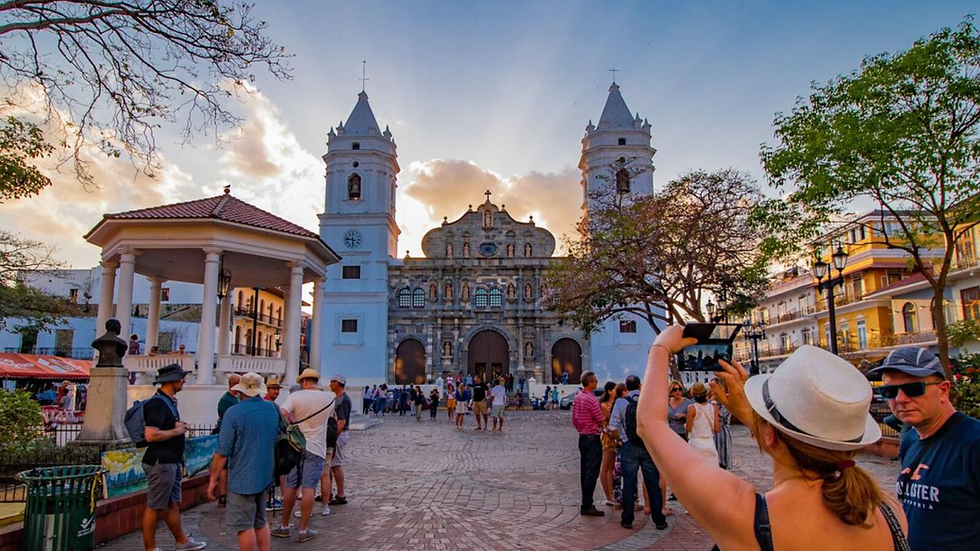
The Geography: Three Districts, One Vision

Most people think "Casco Viejo" is just San Felipe. It's not.
Panama's historic center is three connected neighborhoods. Each has a different stage of restoration, pricing, and regulatory treatment — but they function as a single urban system:
San Felipe – The fully restored core (what tourists call "Casco Viejo")
Santa Ana – Directly adjacent, 5 minutes' walk from Plaza Herrera
El Chorrillo – The working-class neighborhood to the west
Development extends beyond UNESCO boundaries. You have a mix: restored colonial buildings, new construction following design guidelines, and modern projects that blend with the architectural context. Not a museum district—a living neighborhood.
The Precedent: San Felipe Was Rough Too

San Felipe wasn't always expensive. 10-15 years ago: crumbling buildings, high crime, squatters, empty lots. Nighttime foot traffic was extremely limited, and security concerns were widespread. Property was cheap because it was dangerous.
Then government committed: infrastructure, police, tax incentives (Law 136), cultural programming. Developers moved in. Within a decade, San Felipe became Panama's most expensive real estate at $4,500-7,500/sqm.
Now the same playbook is being applied to Santa Ana and El Chorrillo.
Same neglect for decades. Same systematic upgrade: Distrito Creativo designation, Inter-American Development Bank funding, Ministry of Public Works infrastructure, cultural anchors, public space improvements.
Same government agencies. Same funding mechanisms. Same phased approach. Just 5-7 minutes' walk west.
And San Felipe prices keep rising: The Mayor's office is recovering 7 beaches along the historic center's coastline—the Ruta de las Playas del Casco Antiguo (Beach Route). First beach reopened in January 2026. This coastal corridor connects plazas, seawalls, and heritage sites, adding beach access to an already premium neighborhood. Expect San Felipe's $4,500-7,500/sqm to climb higher, widening the gap with Santa Ana.
Follow the Investment: Distrito Creativo

In 2025, Panama's Ministry of Culture designated Santa Ana as the country's Distrito Creativo (Creative District)—backed by the Mayor's office, Inter-American Development Bank, developers, local NGOs, community groups, and foundations. This designation isn’t symbolic — it comes with funding, programming, and physical infrastructure.
What's actually happening:
Puerta Sur Transit HubNew southern entrance connecting El Chorrillo, Santa Ana, and San Felipe via electric buses and trolley. Construction underway since 2023—creates tourist access and mobility infrastructure.
Teleférico (Cerro Ancón Cable Car)BID-funded project connecting El Chorrillo, Cerro Ancón, Mi Pueblito, Casco Viejo, and Amador Convention Center. Ministry of Environment advanced preliminary design tender in June 2025 ($67M BID financing approved). Tourism-oriented cable car system planned as private concession—improves connectivity and creates tourist attraction linking the historic district to Cerro Ancón hilltop and Amador waterfront.
Development Corridor: Calle C & Calle 16 Oeste Active private development between Plaza Santa Ana and Plaza Amador. Multiple mixed-use projects underway on Calle C and Calle 16 Oeste—new construction combining modern design with historic context. This corridor is becoming Santa Ana's development spine, connecting the two main plazas with residential, commercial, and cultural spaces.
La Manzana Cultural Hub Five historic buildings on Calle 15 converted to theater (150 seats), coworking, galleries, offices, residences. Casa Santa Ana and IFF Panama Film Festival headquartered here.
Municipal Infrastructure $38.8M invested in 2025: Plaza 5 de Mayo renovation, Calle Estudiante improvements—major public space upgrades.
El Chorrillo Street Rehabilitation MOP rehabilitating 7,530 meters of streets, water systems, sewage, parks. Not proposed—under construction.
Creative Economy Programs $1M from Inter-American Development Bank training 300+ entrepreneurs and artists through "Crea en Panamá"—building the cultural ecosystem government envisions.
Pattern from San Felipe: once infrastructure goes in and cultural programming starts, transformation accelerates. Santa Ana and El Chorrillo are early in that curve.
The Tax Catalyst: Law 136 Expansion
Law 136 of 2013 drove San Felipe's transformation:
30-year property tax exemption
10-year rental income tax exemption
100% deductible renovation costs
The law expired. Now in National Assembly for renewal and expansion to Santa Ana and El Chorrillo.
If passed in its proposed form, properties that currently trade 30–50% below San Felipe would receive the same tax treatment that made San Felipe expensive. Buy before that's priced in.
The Pricing
San Felipe: $4,500-7,500/sqm (rising with beach corridor completion)
Santa Ana Patrimonial: $3,000-4,500/sqm
Santa Ana development sector: $2,500-3,500/sqm
El Chorrillo: $2,000-3,000/sqm
Ranges reflect recent asking and executed transactions and vary by block, building quality, and zoning.
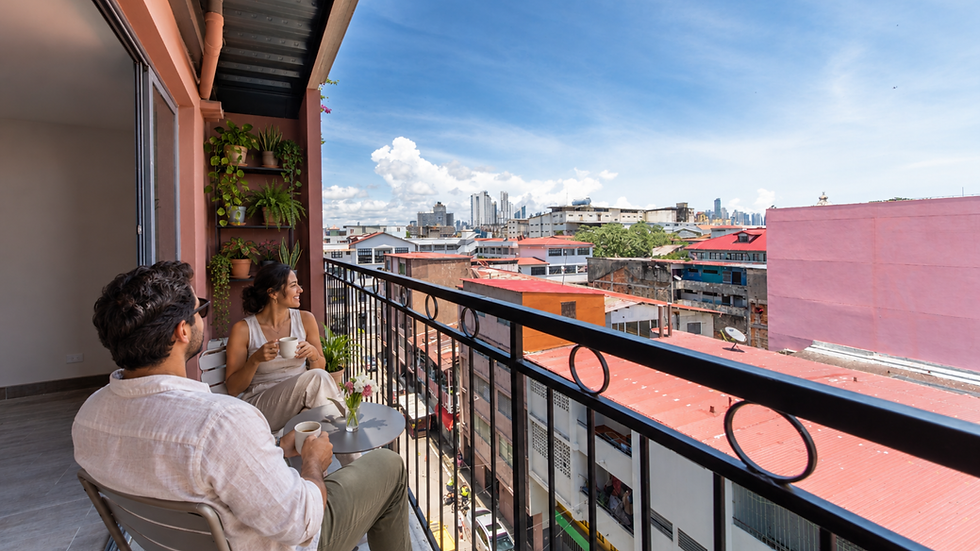
You're buying new construction or renovated buildings with modern amenities, 5-10 minutes' walk from San Felipe's restaurants and culture, positioned in the path of infrastructure expansion.
Not colonial restoration projects. Neighborhoods being systematically upgraded—same process that made San Felipe expensive.
The Timing Windows (Why This Is a 2025-2026 Trade)
Investor Visa: October 15, 2026
Panama's Qualified Investor Visa currently requires $300K in real estate for permanent residency. On October 15, 2026, that increases to $500K (Executive Decree 193, 2024).
Santa Ana properties: $200K-450K range. Perfect for current threshold. After October 2026, you'll need significantly more capital.
Law 136 Expansion
If law passes with Santa Ana inclusion, tax economics change. Buy before it's priced in.
Infrastructure Completion
El Chorrillo rehab, Plaza 5 de Mayo, Puerta Sur, teleférico, water/sewage upgrades finish over next 18-24 months. Neighborhoods are less attractive during construction than after.
The Comparables
Locally: San Felipe itself. 10-15 years ago: neglected, dangerous, cheap. Today: $4,500-7,500/sqm. Government committed and followed through.
Internationally:
Lisbon's Alfama sat at 30-40% discount to Baixa. Government invested. Prices converged in 5 years.
Mexico City's Roma Norte was "next" after Condesa. Infrastructure closed the gap.
Brooklyn's Dumbo traded at discount to Manhattan. Infrastructure eliminated the differential.
Pattern: adjacent neighborhoods with government backing catch up to the established core. San Felipe proved this locally. In each case, early investors weren’t betting on aesthetics — they were following infrastructure and policy.
What to Buy
1. Proximity to anchors – Plaza Amador, Plaza Santa Ana, Avenida Central
2. Rental fundamentals – Profitable today, not pure speculation
3. Developer track record – Established operators with completed projects
4. Legal clarity – Titled property, compliant zoning, and bankable structures that support resale.
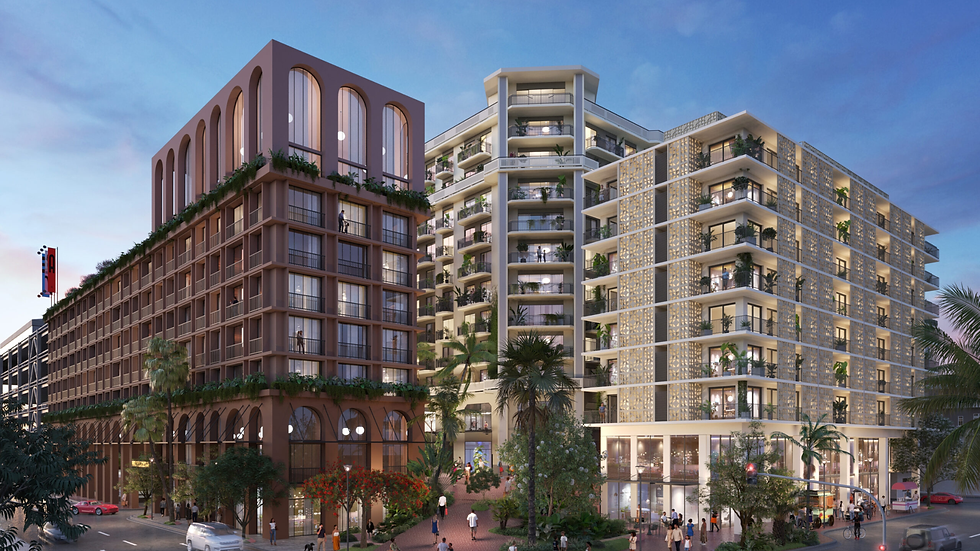
Example: PH Casco View – EDGE certified for sustainability, MOA Award MAGNO winner for excellence in design. Demonstrates the quality of new development in Santa Ana's transformation.

The Investment Thesis
Santa Ana is where Panama's government is directing cultural and infrastructure investment—the next phase of historic district expansion.
You're buying:
In the path of proven development (San Felipe transformation shows the model works)
At a 30-50% discount to the restored core
With government-backed infrastructure underway (funded and active, not proposed)
Before potential Law 136 tax benefits (same incentive that accelerated San Felipe)
While the investor visa threshold is $300K (increases to $500K October 15, 2026)
Not speculation on distant gentrification. Positioning in a neighborhood being systematically upgraded using the playbook that transformed San Felipe from dangerous to expensive in 10-12 years.
The question isn’t whether transformation happens — it’s whether you participate early or after pricing converges.
Want to see current inventory? Contact Casco View Life


rr88m1.com mình vừa ghé qua để xem giao diện thôi. Ấn tượng đầu tiên là trang này trình bày theo từng khối khá gọn, kiểu thông tin nào ra thông tin đó nên mắt lướt một vòng là bắt được mạch, không phải kéo lên kéo xuống đoán xem mình đang ở đâu, và mấy phần nói về nguồn gốc pháp lý họ đặt khá lộ, để ngay trên trang nên ai muốn kiểm tra thì chỉ việc nhìn là thấy. Mình cũng để ý thao tác chuyển mục, cuộn trang rồi quay lại vẫn mượt, menu nằm chỗ dễ nhìn nên không bị “mất dấu” giữa chừng, cảm giác làm site này có nghĩ tới người hay đổi ý…
Mình thỉnh thoảng cũng xem soi cầu cho vui thôi, kiểu coi như bài tập để tập nhìn dàn số và đối chiếu lại cảm giác của mình. Hồi trước toàn nghe người quen mách rồi ghi bừa, trật vài lần là khó chịu, nên giờ mình thích đọc mấy chỗ có giải thích rõ ràng hơn; đúng sai gì thì ít nhất cũng học được cách họ lập luận. Có lần lướt ngang https://soicauxsmb.pro/ thấy họ hay nói về chuyện lọc theo chu kỳ, mình thử làm theo kiểu chọn bớt số chứ không đặt niềm tin tuyệt đối, thấy đỡ bị cuốn theo cảm xúc hơn hẳn. Mình vẫn nghĩ mấy thứ này chỉ nên xem như tham…